Mars has been capturing the human imagination for decades. The latest discoveries, based on both direct exploration by NASA-sent vehicles and analysis of satellite images, reveal a planet that was, in the past, anything but dead and monotonous. Data from recent years show that its past was significantly more dynamic and unusual. Rovers and orbiters (spacecraft orbiting the planet and collecting data) reveal traces of former water systems, chemical anomalies and rock structures that can no longer be explained solely by simple planetary erosion. Some phenomena are well explained; some others, less so; whilst others remain unexplained, raising the question: are all the observed structures merely the product of natural processes?
Rock webs
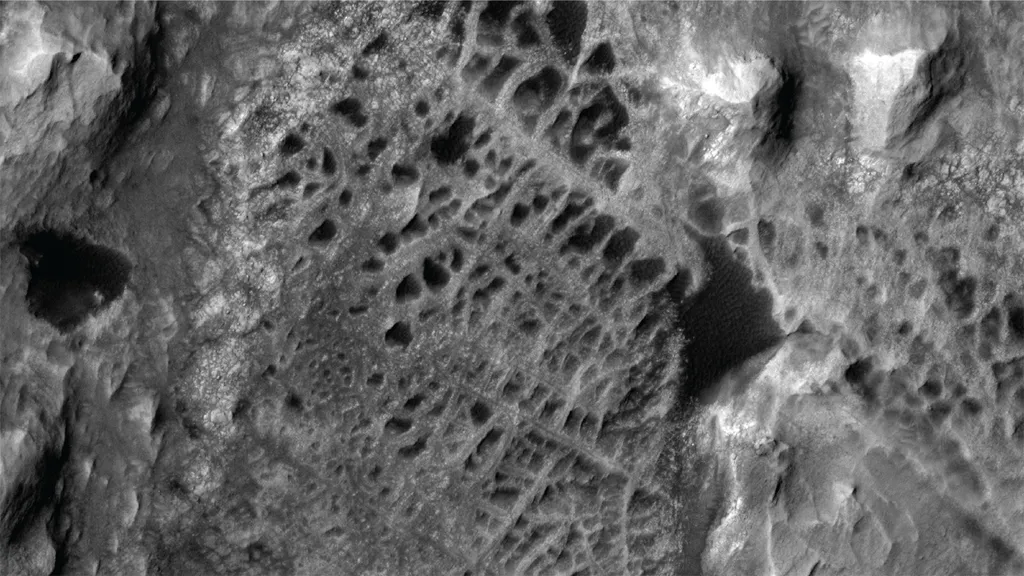
Among the most reliable and best-studied discoveries are the rocky mesh-like structures known as ‘boxwork’, which the rover Curiosity is investigating on the slopes of Mount Sharp in Gale crater. From above, they resemble enormous spiderwebs or honeycombs. 1
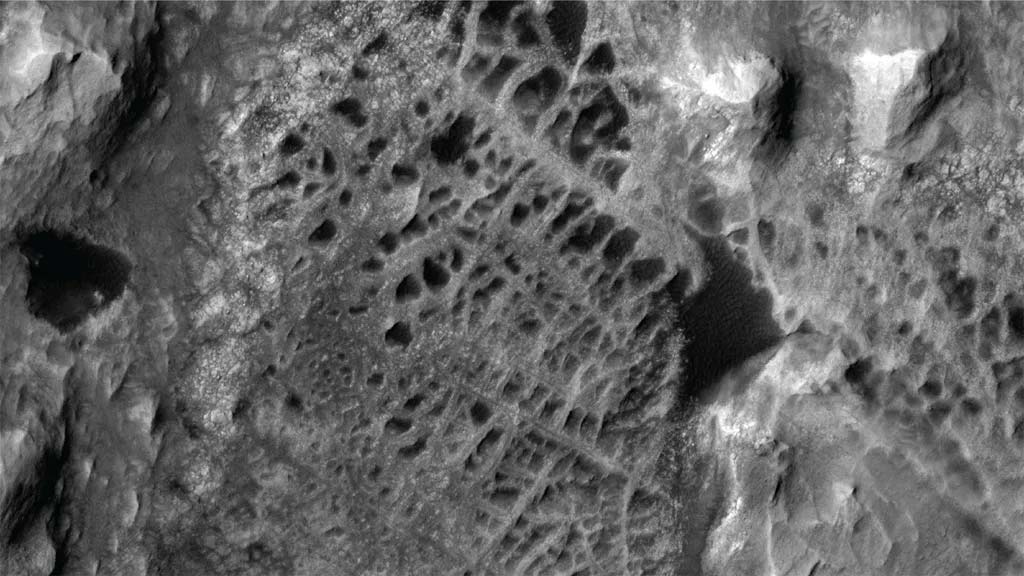
From orbit, the stone lattice structures look like a giant spider’s web spread across the surface of the Red Planet. Source: Live Science
Well-known geological processes contributed to their formation: billions of years ago, mineral-rich groundwater circulated through the cracks, filling and cementing them. Subsequent long-term erosion carried away the softer surrounding material, whilst the more resistant mineral ridges remained. These formations are of exceptional importance because they provide direct evidence of: the long-term presence of liquid water, a relatively stable underground environment, and the planet’s geologically complex history.
Unusual egg-shaped clusters
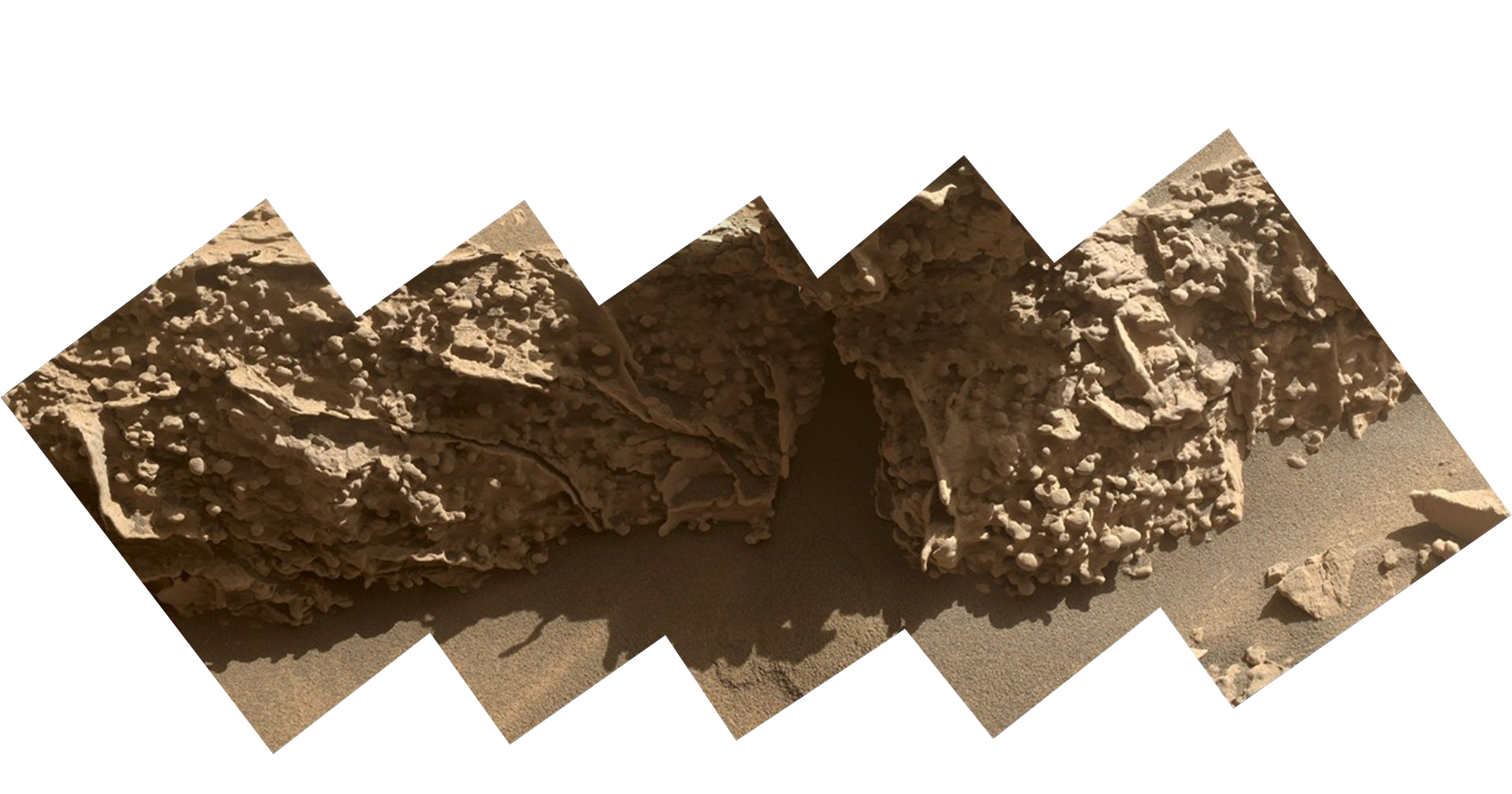
Alongside these rocky networks, scientists have discovered tiny, irregular nodular formations – clusters of sorts attached to the ridges, which have not yet been observed in this context on Mars. Their origin is not yet fully understood. 1
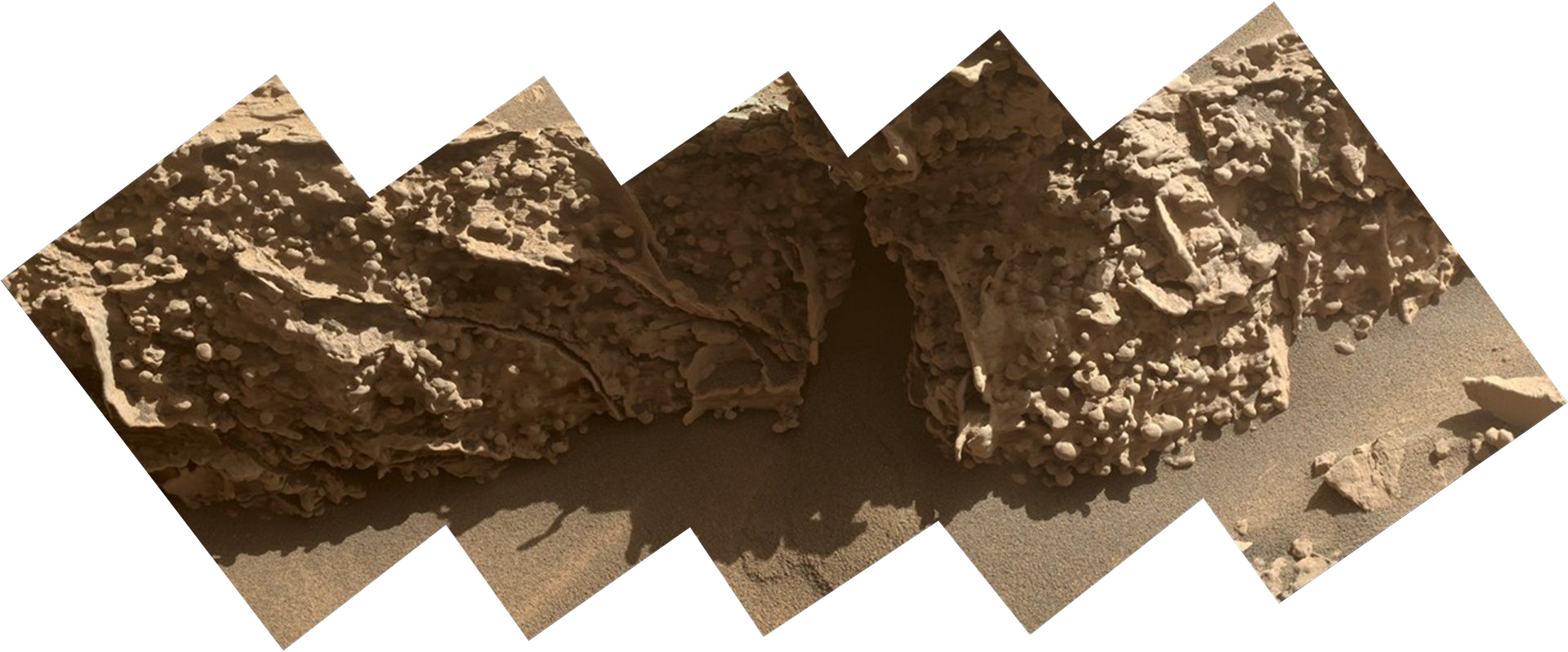
A photograph taken on 26 September 2025 shows hundreds of tiny egg-shaped nodules on the surface of a ridge of one of the networked structures. Source: NASA
There are working hypotheses involving the multi-phase action of water, changes in chemical conditions and the sequential deposition of minerals. However, the scientific community openly admits that the exact mechanism behind the formation of these outcrops is not yet known.
Evidence of ancient life on Mars?
Alongside the geological structures, the Perseverance and Curiosity rovers have also detected chemical and mineral features that NASA and science journalists refer to as potential biosignatures. This comes from a tiny rock sample, dramatically named ‘Sapphire Canyon’, which shows a biological signature or patterns that on Earth are often associated with the activity of microorganisms, as indicated by specific mineral distributions, the effects of organic chemistry, and chemical stains that can form in biological environments. 2 3
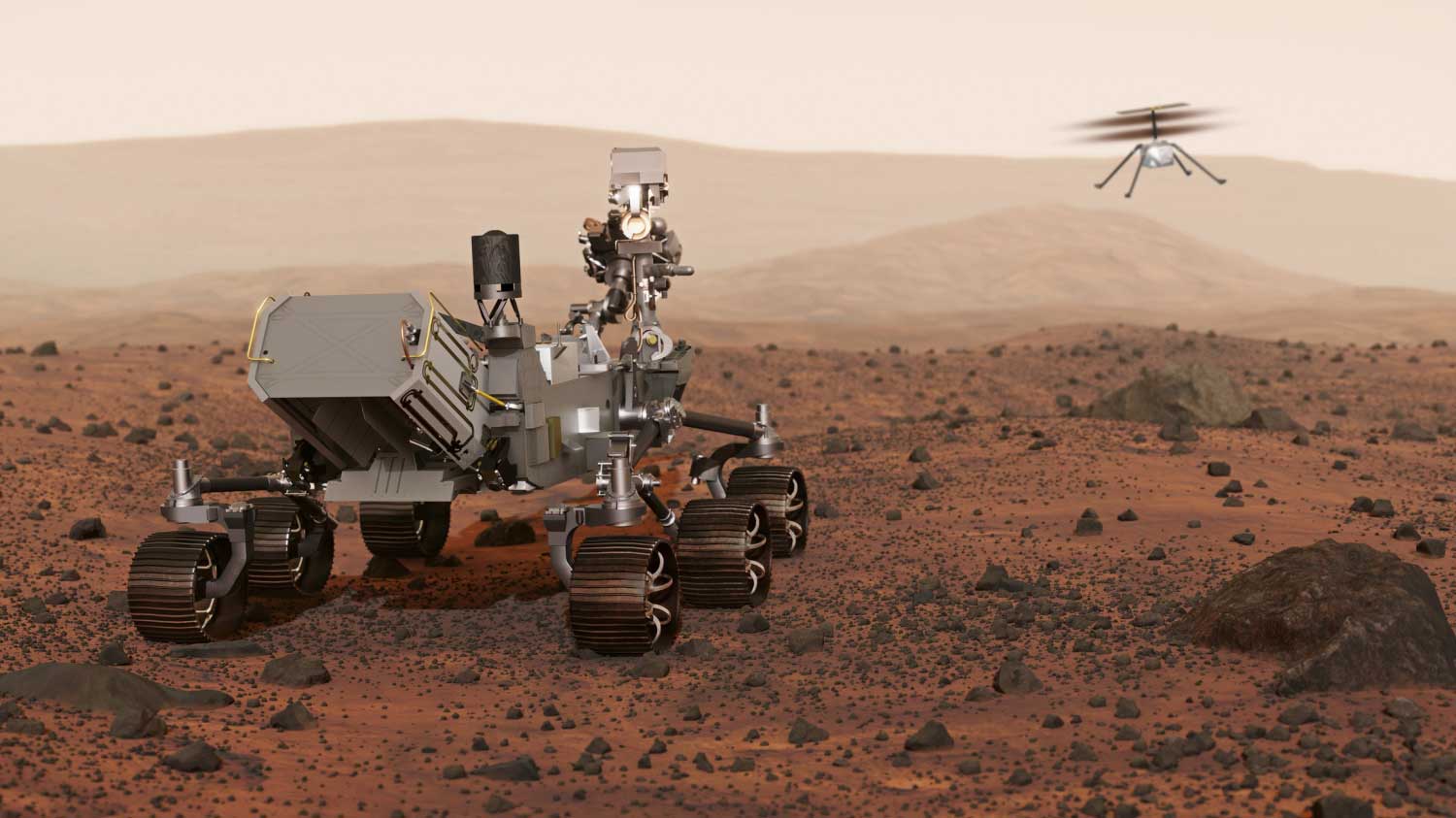
NASA rover collecting data on Mars. Source: CNET
NASA itself explicitly emphasises that these are the most interesting samples to date, precisely because they go beyond routine geology, yet do not yet allow for a definitive conclusion. The samples are therefore intended for future analysis on Earth, where significantly more precise analytical methods will be available. 4
Forms suggesting an intelligent origin
Some independent researchers offer a completely different interpretative framework. Based on satellite images, George J. Haas points to structures that are said to display a high degree of geometry, symmetry and organisation: pyramidal shapes, grid-like ‘cities’, geoglyphic figures and star-shaped structures. 5
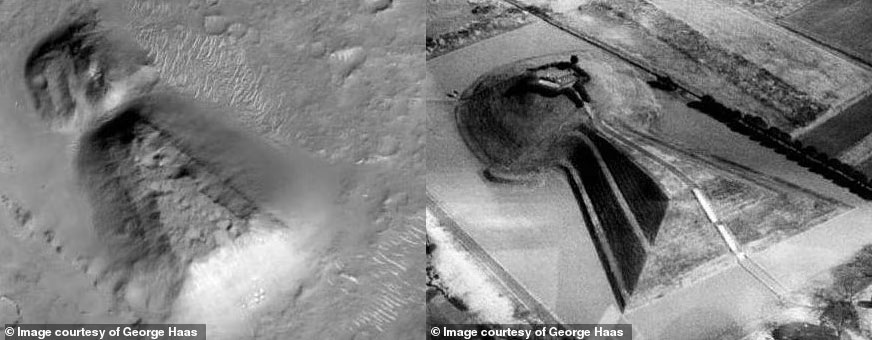
The ‘keyhole’ structure on Mars resembles a Kofun tomb in Japan (pictured right).
Source: Daily Mail (left image, right image)
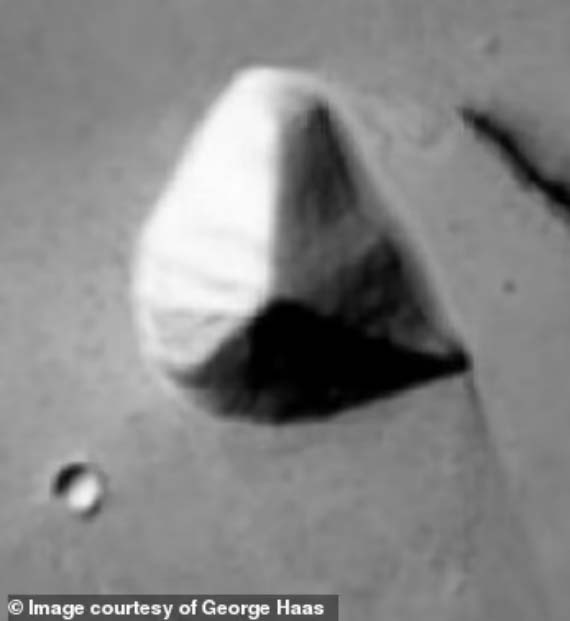
A three-sided pyramid on Mars. Source: Daily Mail
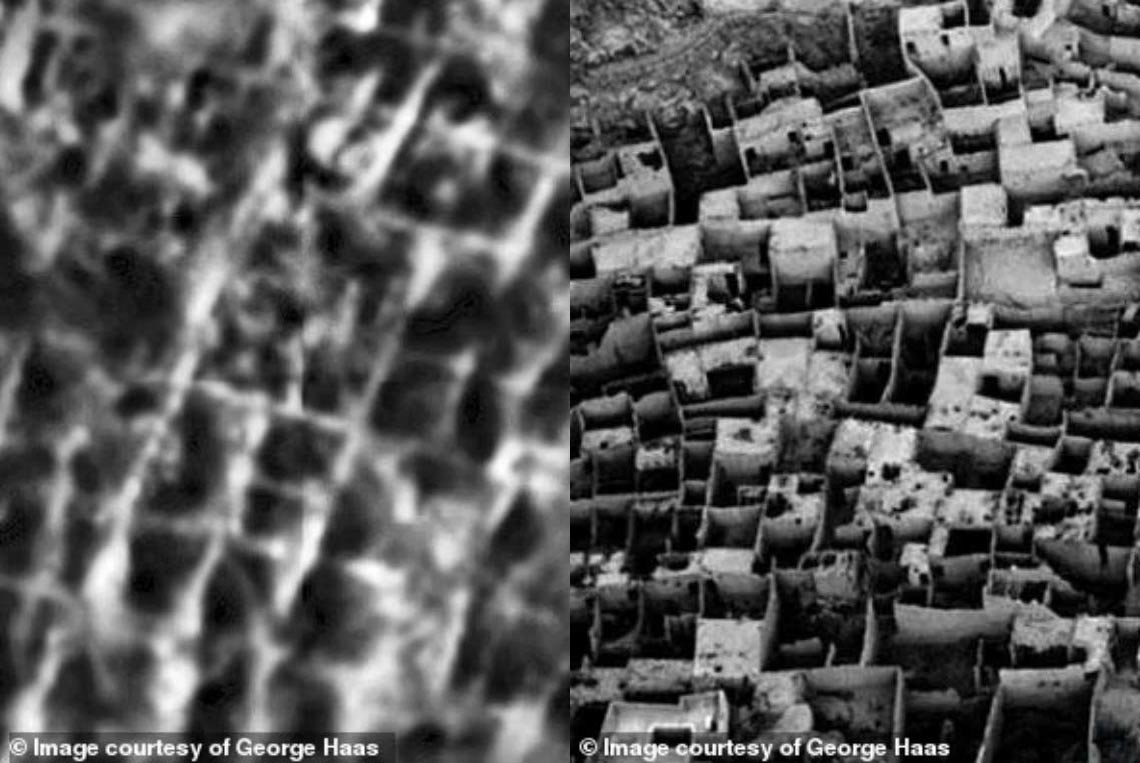
The Martian Atlantis complex resembles the city of Al-Ula in Saudi Arabia (pictured right).
Source: Daily Mail (left image, right image)
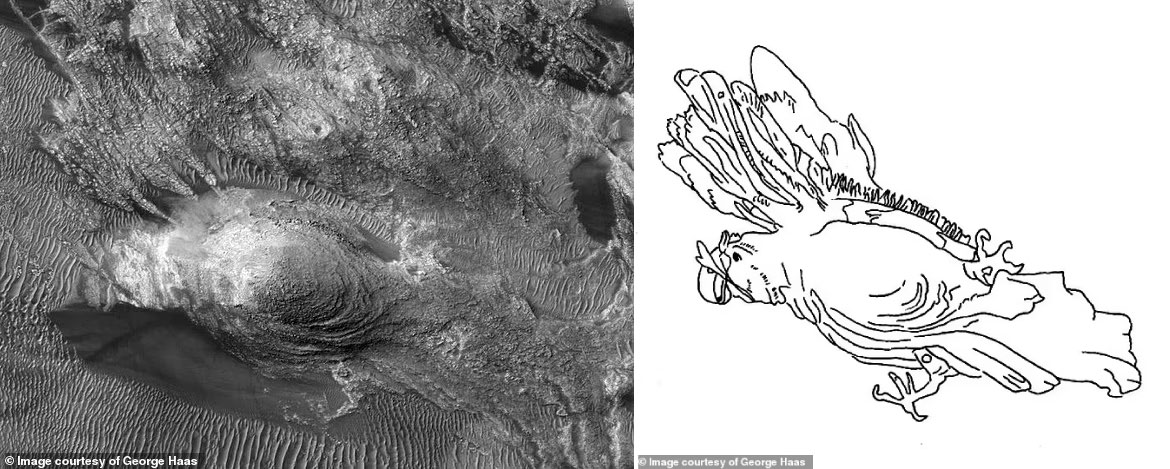
According to Haas, the parrot geoglyph has 22 points of anatomical accuracy.
Source: Daily Mail (left image, right image)
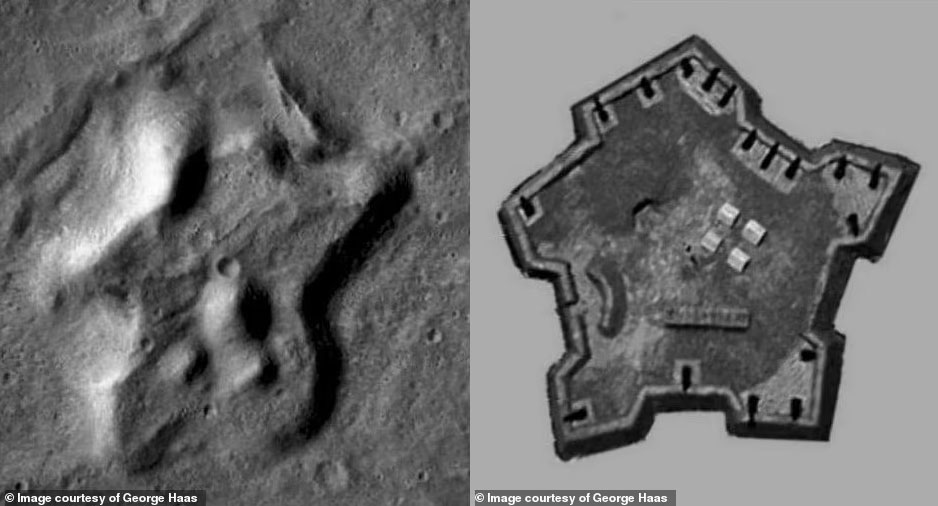
The star-shaped structure on Mars is roughly the same shape as Fort Henry in Tennessee (pictured right). Source: Daily Mail (left image, right image)
Haas’s speculations and comparisons are based primarily on visual analysis, comparisons with human architecture and pattern recognition. Official science generally explains them through pareidolia – the natural tendency of our brains to recognise familiar patterns in random shapes. Nevertheless, it is an interesting fact that both sides – mainstream science and alternative interpretations – agree on one point: Mars contains structures that have not yet been fully explained. The difference lies in methodology and the degree of inference, not in the very existence of the anomalies. 6
To summarise, geological structures and evidence of water, potential biosignatures and interpretations of man-made features do not yet prove that life once existed on Mars or that the structures on Mars are of intelligent origin. However, they do mean that science itself acknowledges the existence of phenomena it cannot yet definitively explain. It is precisely in this space – between verified evidence and open questions – that one of the most fascinating debates in modern planetary science is unfolding. Mars today is no longer a symbol of a dead world, but a laboratory of the unknown and unexplored.
Sources
- Baker, Harry. Giant ‘spiderwebs’ on Mars contain tiny egg-like structures scientists can’t yet explain. Live Science (February 2026). https://www.livescience.com/space/mars/giant-spiderwebs-on-mars-contain-tiny-egg-like-structures-that-scientists-cant-quite-explain-nasa-rover-reveals
- Taveau, Jessica. NASA Says Mars Rover Discovered Potential Biosignature Last Year. NASA (September 2025). https://www.nasa.gov/news-release/nasa-says-mars-rover-discovered-potential-biosignature-last-year/
- Lacoma, Tyler. Yes, NASA Found Evidence of Ancient Life on Mars. Here’s the Real Story. CNET (September 2025). https://www.cnet.com/science/space/yes-nasa-found-evidence-of-ancient-life-on-mars-heres-the-real-story/
- Video: https://www.youtube.com/live/-StZggK4hhA?si=Vp-fY1it5Wshi9e2
- Haas, George J. The Great Architects of Mars: Evidence for the Lost Civilisation on the Red Planet. Rochester, Vermont: Bear & Company (January 2025).
- Lapointe, Ellyn. Mysterious Mars structures discovered by NASA ‘prove there was life on the Red Planet’. DailyMail (april 2026). https://www.dailymail.com/sciencetech/article-14483547/Mars-NASA-structures-prove-life-Mars.html